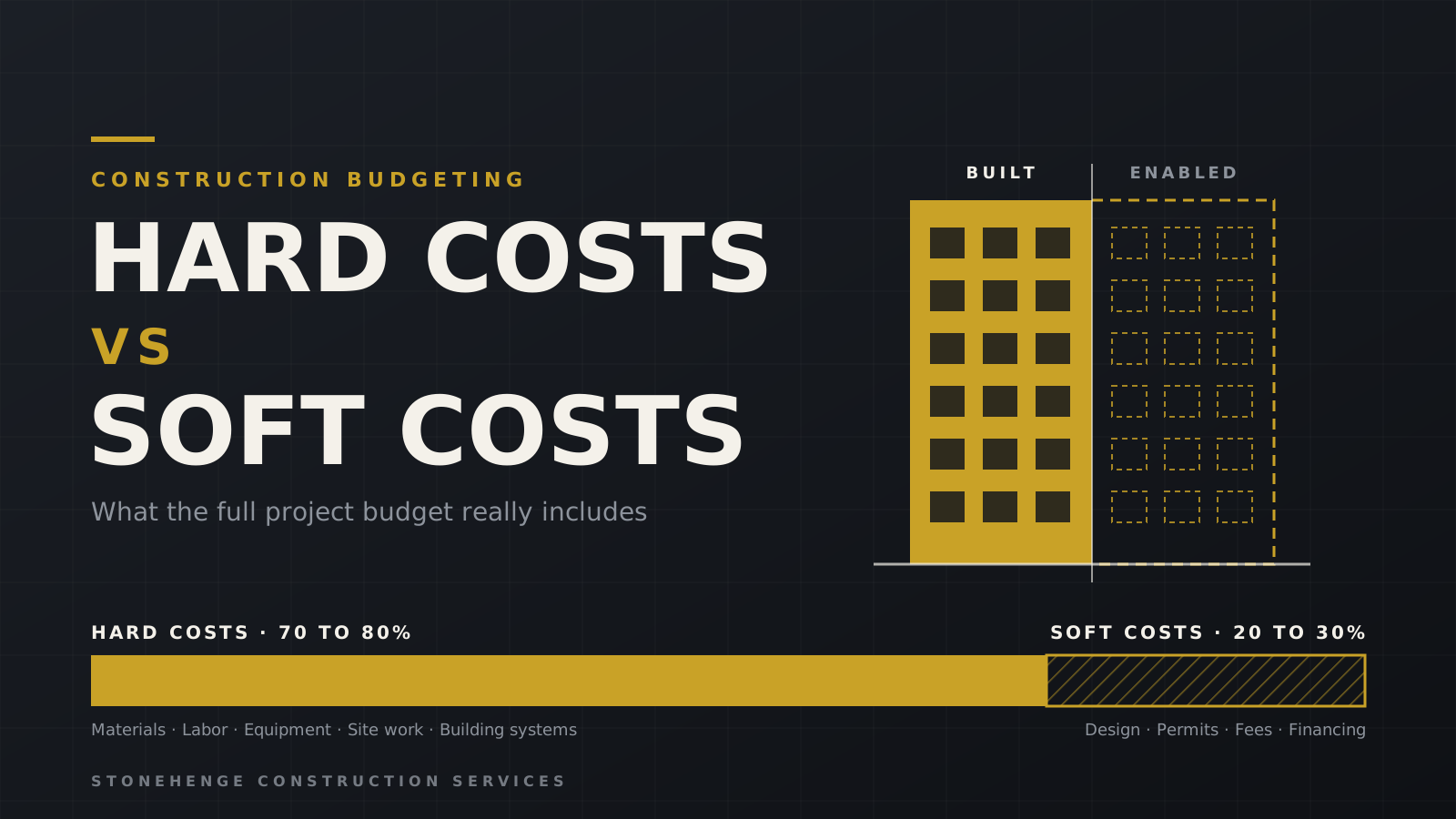
Hard costs vs. soft costs is the two-part division behind every construction budget: hard costs pay for the physical building, including materials, labor, equipment, site work, and installed systems, while soft costs pay for everything that makes the building possible, including design, engineering, permits, legal work, insurance, and financing. On most commercial projects, hard costs account for roughly 70 to 80 percent of the total budget and soft costs make up the remaining 20 to 30 percent. Both categories matter after opening day because hard-cost decisions shape long-term maintenance expenses, and soft-cost items like loan interest, insurance, and taxes keep running until the property is open and producing revenue.
What Are Hard Costs in Construction?
Hard costs are the expenses tied directly to putting a building in place. If you can walk up to it and touch it when the project is finished, it was almost certainly a hard cost. You will also hear them called brick-and-mortar costs or direct construction costs, and they are the numbers most owners picture when they think about what a project costs.
Common Hard Cost Examples on Commercial Projects
Construction hard costs start below the ground and work up. Site clearing, grading, underground utilities, paving, and landscaping all belong here. So do the foundation, structural frame, roofing, exterior envelope, and interior finishes. Mechanical, electrical, plumbing, and fire protection systems are hard costs, and on a restaurant or hotel, they are often the most expensive. Built-in items such as millwork, casework, and kitchen exhaust hoods count as well, along with the labor and equipment needed to install all of it.
Hard costs are the easier half of the budget to estimate. You can measure drawings, subcontractors can bid defined scopes, and you can lock in material pricing through early procurement.
What Are Soft Costs in Construction?
Soft costs are the expenses required to plan, approve, finance, and open a project that never become part of the physical structure. They pay for a service, a fee, or a right instead of a material. Soft costs begin well before anyone mobilizes to the site and often continue after the certificate of occupancy is issued.
Soft Cost Examples Owners Overlook
Architectural and engineering fees are the soft costs everyone remembers. The ones that cause trouble are quieter. Geotechnical reports, surveys, environmental assessments, and traffic studies show up early. Permit fees, plan review fees, impact fees, and utility connection charges arrive next, and in some jurisdictions impact and tap fees alone can reach six figures on a commercial site. Legal fees, accounting, title work, appraisals, and lender inspection fees follow the financing. Builder's risk insurance, property taxes during construction, and construction loan interest run for every month the project is open.
That last point deserves attention. Interest carry is a soft cost that behaves like a meter. A hotel that takes 12 to 18 months to build pays interest the entire time, and every week of delay adds to a bill that produces nothing visible on site.
Why the Difference Between Hard and Soft Costs Matters to Owners
The most expensive mistake we see owners make with hard costs vs soft costs is treating the contractor's number as the project number. A general contractor's proposal covers the hard costs plus the contractor's own general conditions and fee. It does not cover your architect, your financing, your insurance program, or your furniture and equipment, and in many cases it does not cover your permits. An owner who secures funding based on the construction contract alone can find the project 20 to 30 percent underfunded before the first footing is poured.
The distinction also matters to your lender. Construction loans are typically structured with separate hard- and soft-cost budgets, and the two fund differently. Lenders usually release hard-cost draws after an inspector verifies work in place, while soft costs are generally paid against invoices. Moving money between those categories mid-project often requires lender approval, so miscategorizing a budget at closing can create cash flow headaches months later. Classification also affects how costs are capitalized and depreciated, so talk with your CPA before finalizing the budget.
The Gray Areas: Costs That Can Land in Either Column
Not every line item sorts cleanly, and the gray areas are where budgets develop gaps.
General Conditions and Contractor Fees
The contractor's general conditions cover supervision, temporary facilities, site security, dumpsters, and similar costs of running the job. They aren't physical parts of the building, yet they sit inside the construction contract, so most owners and lenders treat them as hard costs. The important thing is confirming they are counted once and only once.
Contingency
A well-built budget carries two contingencies. A hard-cost contingency covers construction unknowns, such as concealed conditions in a renovation. A soft cost contingency covers design revisions, extended review periods, and fee changes. Owners working under a guaranteed maximum price should understand that the contractor's contingency inside the GMP is separate from the owner's contingency outside of it. See more in What Is a GMP Contract? A Guaranteed Maximum Price Guide for Owners.
FF&E and Owner-Supplied Equipment
Furniture, fixtures, and equipment usually sit outside the construction contract as their own budget category. Movable furniture is generally treated as an owner cost, while built-in casework is a hard cost. On hotels and restaurants, this line is large enough that it should never be left to assumption. If the kitchen equipment package is owner-furnished and contractor-installed, the purchase belongs in your budget, and the installation labor belongs in the contractor's.
Permits and Fees
Building permit fees are sometimes paid by the contractor and sometimes by the owner. Either approach works. What fails is when each party assumes the other has it covered.
How Hard and Soft Costs Shift by Project Type
The 70 to 80 percent rule of thumb moves depending on what you are building.
Franchise and Quick-Service Restaurants
Franchise projects carry soft costs that do not exist elsewhere. Franchise fees, brand design review, required prototype drawings, and mandated vendor packages for signage and kitchen equipment all land in the owner's budget. Because a quick-service build may take only three to six months, interest carry is modest. Still, health department reviews, grease interceptor approvals, and utility tap fees can be disproportionately large compared to the size of the building. Learn more about Hospitality & Restaurants.
Hotels
Hotels run longer and carry higher soft costs. Longer schedules mean more loan interest, more months of builder's risk insurance, and more property tax during construction. Brand technical services fees, pre-opening expenses, and a substantial FF&E and OS&E budget sit on top of the design and permitting costs every project has. For hotel developers, the soft-cost side of the budget is often where feasibility is won or lost. See also Hospitality Construction: Why Building a Hotel Isn't Like Building Anything Else.
Institutional and Industrial Projects
Institutional work tends to carry heavier design, commissioning, and compliance costs, along with longer approval processes. Industrial projects often flip the ratio the other way, with simple shell structures keeping design fees low as a percentage. At the same time, specialized process equipment falls into its own category. Learn more about Industrial & Commercial and Institutions & Municipal.
How to Control Hard and Soft Costs Together
Hard and soft costs are connected through the schedule. Every delay in design, permitting, or construction extends interest, insurance, taxes, and general conditions at the same time. That is why the most effective soft cost control strategy is often a hard cost discipline: a realistic schedule, early procurement of long-lead materials, and a complete set of documents before pricing.
Bringing your general contractor in during preconstruction is the most reliable way to get there. Early involvement lets you value-engineer while changes are still cheap, produces hard cost estimates that hold up, and catches scope gaps before they turn into change orders. It also gives you a partner who can help build a responsibility matrix. This simple document assigns every cost line to the owner, the architect, or the contractor so nothing falls between the three.
Build a Complete Budget Before You Build Anything Else
Understanding soft costs vs. hard costs in construction is ultimately about seeing the whole project before you commit. The construction contract is the largest single piece, but it is not the whole picture, and the owners who finish on budget are the ones who accounted for both columns from day one.
Stonehenge Construction Services takes a consultative approach to every hotel, franchise, institutional, and industrial project, starting with detailed budgets, realistic schedules, and preconstruction planning that accounts for the full cost of getting your doors open. If you are planning a commercial project and want a clear view of what it will really cost, book a consultation with our team and let's discuss what's possible.