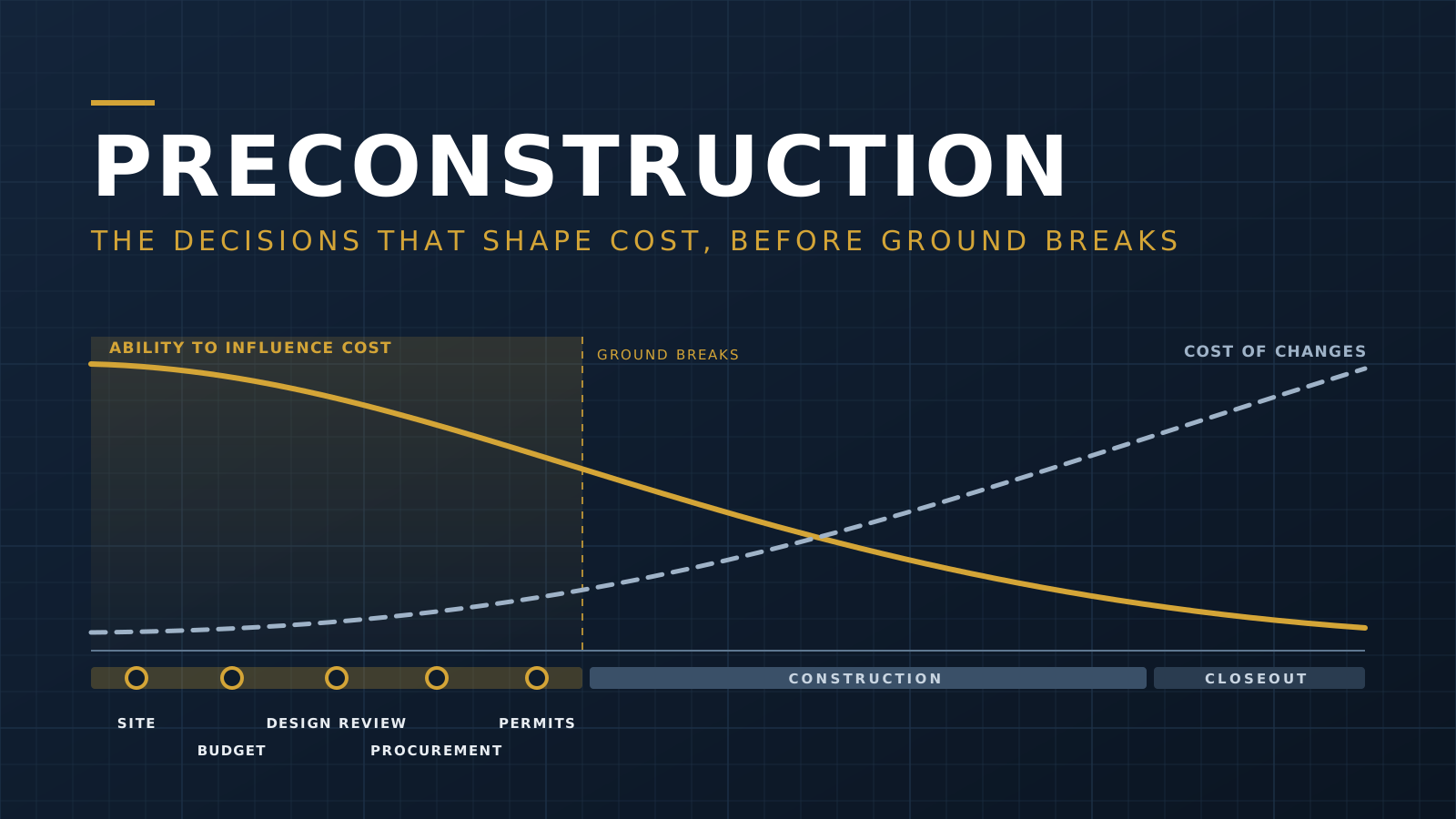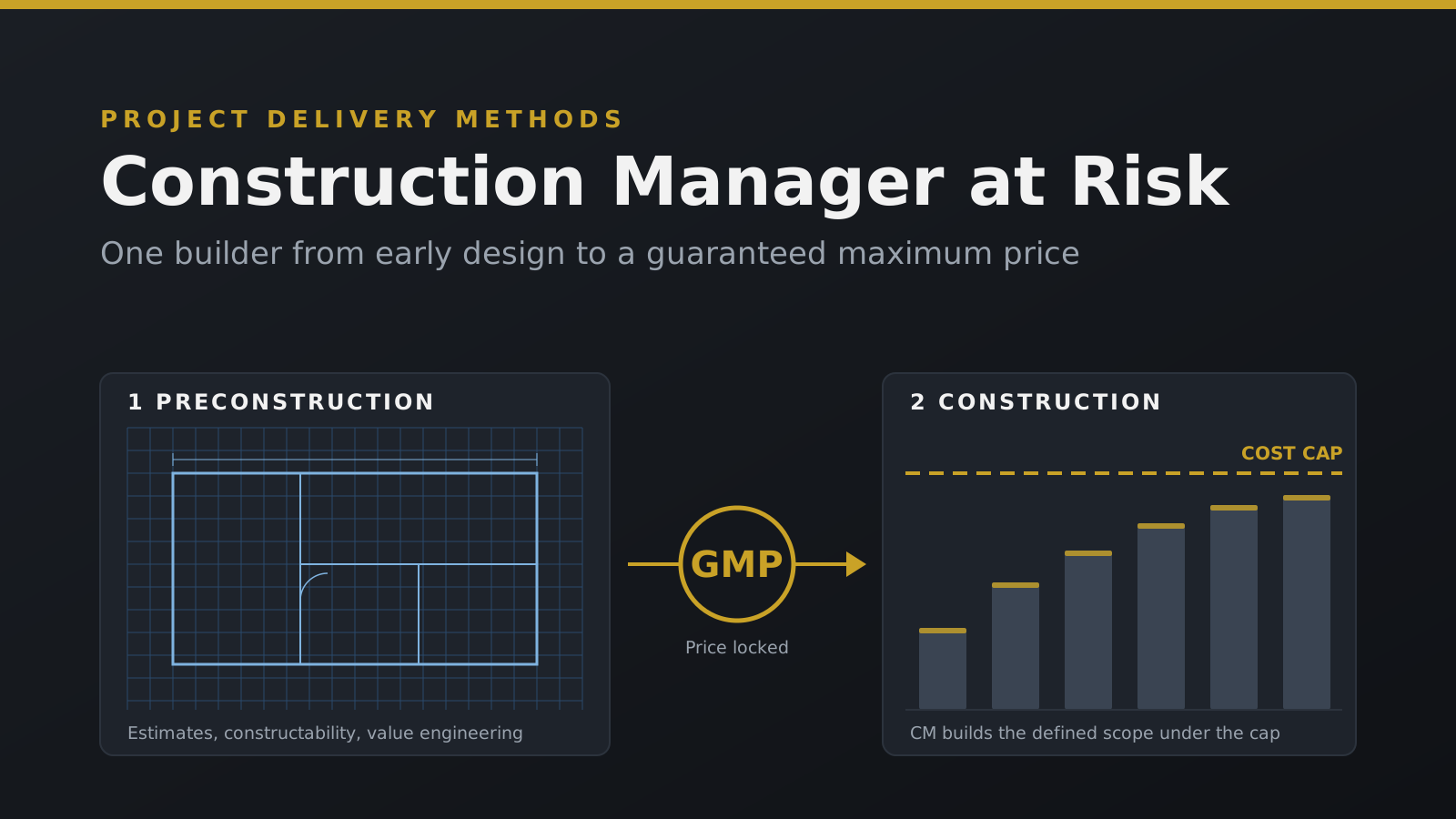
Value engineering in construction is a structured review of a project's materials, systems, and building methods to deliver the same function at a lower total cost. It works by isolating what each element of a building is actually supposed to do, then identifying alternatives that perform that job as well or better for less money across the life of the asset. Value engineering delivers the most savings during design and preconstruction, when changes cost nothing to make on paper, and it becomes progressively more expensive to apply once drawings are permitted and crews are mobilized. Executed correctly, the value engineering process protects long-term quality and maintenance costs rather than trading them away for a lower number on a bid form.
Value Engineering Is Not Cost Cutting
The fastest way to understand value engineering in construction is to understand what it is not. Cost cutting removes scope. Value engineering preserves scope and changes how it is delivered.
If a hotel developer's budget is over by $400,000 and the response is to delete the pool deck, that is cost-cutting. If the response is to swap a cast-in-place concrete structure for a load-bearing metal-stud and precast-plank system that shaves six weeks off the schedule and reduces costs without touching a single guest-facing feature, that is value engineering. The owner still gets everything they came for.
This distinction matters because owners who have been burned once tend to hear "value engineering" and brace for a downgrade. In practice, a good VE exercise sometimes recommends spending more on a specific system, not less, because the operating cost or replacement cycle justifies it. The measure is value, meaning function divided by cost, not the size of the reduction.
When Value Engineering Happens Determines How Much It Saves
Timing drives everything in construction value engineering, and this is where most projects lose money that was available to them.
During Design and Preconstruction
This is where the leverage lives. During schematic design and design development, a general contractor with pricing exposure to current subcontractor and material markets can flag expensive assumptions before an architect commits to them. Changing a roof assembly, a structural system, or a mechanical approach at this stage costs nothing more than a conversation and a redline. Owners who bring a contractor into design early routinely capture five to fifteen percent in cost avoidance that is not accessible later.
After Permitting
Once construction documents are stamped and permitted, value engineering gets expensive to execute even when the idea itself is sound. A structural change means resubmitting to the building department, which means design fees, review time, and schedule risk. The savings have to be large enough to absorb those costs. Finish-level substitutions and equipment swaps often still pencil out here. Structural and life-safety changes usually do not.
During Construction
Value engineering after mobilization is a last resort and should be treated as such. Contractors can propose substitutions through change orders, but any change to work already sequenced ripples through procurement, subcontractor scheduling, and inspection timing. We evaluate these proposals against total impact rather than line-item savings, because a $ 20,000 material saving that pushes a hotel opening past a booking season is a net loss.
How the Value Engineering Process Actually Works
A real value engineering exercise starts with function, not price. The team examines each major building element and asks what it is required to do, what it costs to deliver that requirement as currently drawn, and whether an alternative method, material, or system achieves the same result more efficiently.
That analysis has to account for more than first cost. A cheaper rooftop unit that carries a higher energy load and a shorter service life costs an owner more over ten years than the unit it replaced. A less expensive flooring product in a high-traffic quick-service restaurant that needs replacement in year four is not a savings; it is a deferred expense with a markup. Life cycle cost, maintenance burden, warranty terms, and lead time all belong in the evaluation alongside the purchase price.
Value Engineering Examples in Commercial Construction
The most useful value-engineering examples come from real project constraints rather than from theory.
On hotel projects, the biggest opportunities usually sit in the building envelope, the structural system, and the guest room finish package. Substituting an exterior cladding system that meets the same performance and appearance standard for a fraction of the installed labor cost can move a budget significantly across a hundred and twenty keys, because every decision multiplies by the room count.
Franchise and quick-service restaurant projects operate under a constraint that most articles on this subject ignore entirely. Brand standards govern the prototype, and the franchisor maintains lists of approved vendors and substitutions. Value engineering on an Arby's, a Dunkin', or a Five Guys build cannot touch protected brand elements, so the work shifts to site work, foundations, structural framing, back-of-house equipment sequencing, and mechanical distribution. Knowing which components are locked by the franchisor and which are open is what separates a contractor who can actually value-engineer a franchise build from one who submits a proposal that gets rejected during brand review.
Industrial and institutional projects tend to yield savings in slab design, clear-height decisions, and mechanical and electrical distribution, where relatively small engineering changes can have large quantity multipliers across a large footprint.
What Owners Should Expect from Their General Contractor
An owner evaluating a general contractor should ask when value engineering happens on their projects and what it produced on recent work. The answer reveals a great deal. A contractor who only mentions VE after a project comes in over budget is describing damage control. A contractor who runs the exercise on every project regardless of budget pressure is describing a process.
Owners should also expect documentation. Every value engineering recommendation should include the original scope, the proposed alternative, the cost delta, the schedule impact, and any effects on warranty, maintenance, or performance. If a recommendation cannot survive being written down that way, it probably is not value engineering.
Getting Value Engineering Right on Your Next Project
Value engineering in construction rewards owners who start early and work with a contractor willing to challenge assumptions before they harden into permitted drawings. The savings available in a two-hour preconstruction conversation about structural systems almost always exceed what can be recovered through months of substitutions once the job is underway.
Stonehenge Construction Services builds value engineering into preconstruction on every project we take on, whether the budget is tight or not, because the discipline produces better buildings either way. If you are planning a hotel, a franchise build, an institutional facility, or an industrial project, we would welcome the opportunity to review your numbers before the drawings are finalized.