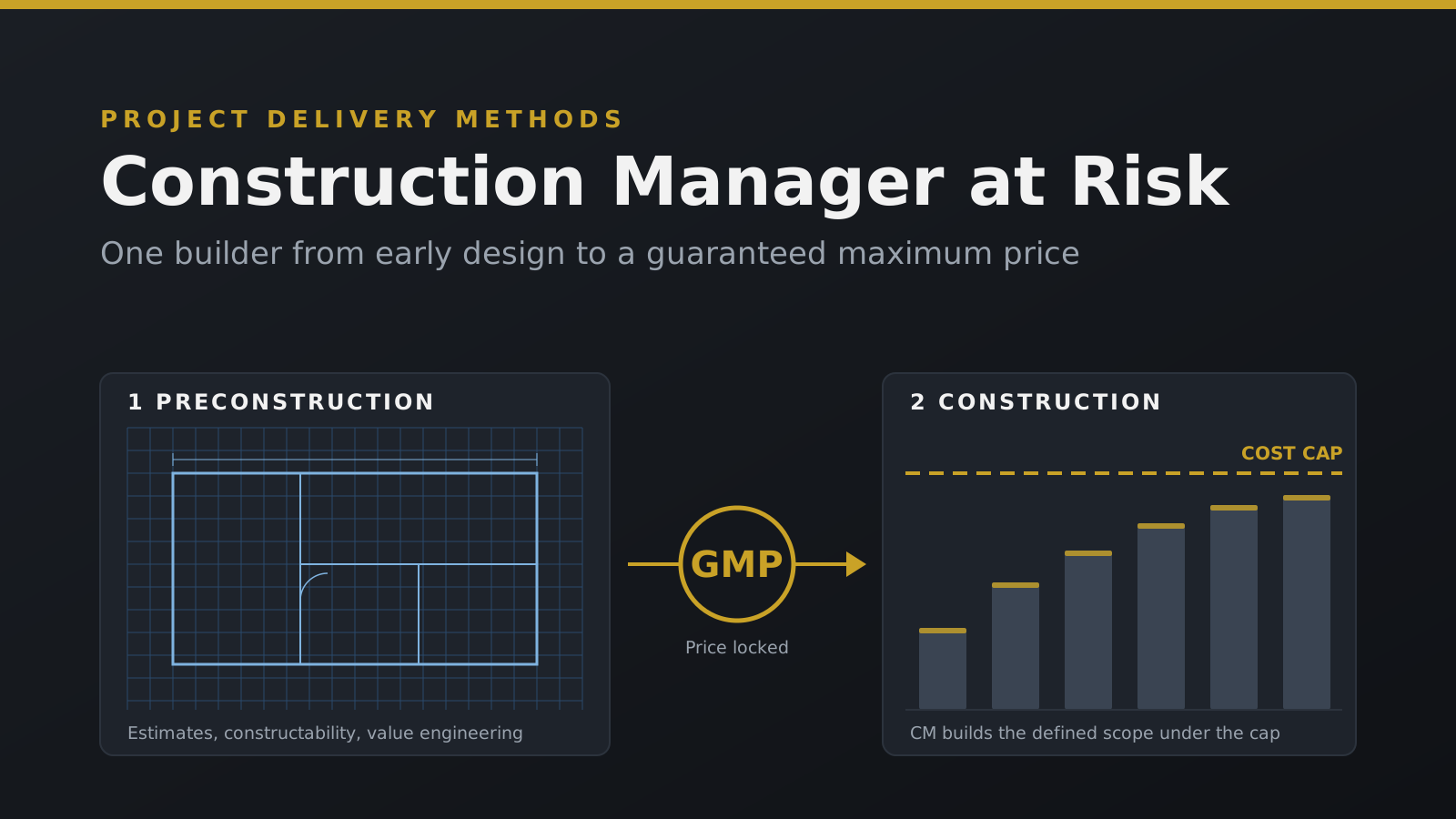
CMAR, or construction manager at risk, is a project delivery method in which an owner hires a construction manager during design to provide preconstruction services, and that same firm then commits to building the project for a guaranteed maximum price and takes on the trade contracts as the builder. The owner gets real builder input on budget, schedule, and constructability while the drawings are still flexible, plus a contractual ceiling on construction cost once the GMP is signed. The long-term value of CMAR depends on how well the GMP, contingency, and open-book terms are written, because those terms decide who actually carries the risk when a project gets tight.
That last point is where most explanations of construction manager at risk fall short. The pages that rank for this topic are largely written by software companies, public agencies, and industry associations, and they tend to describe CMAR from the construction manager's side of the table. This article is written for the other side: the hotel developer, franchise operator, or institutional owner deciding whether CMAR is the right way to build.
How the Construction Manager at Risk Delivery Method Works
CMAR runs in two distinct phases. Some owners sign a single contract with a preconstruction section and a construction section, while others sign a preconstruction services agreement first and add the GMP later as an amendment. Either way, the relationship changes shape once the price is locked.
The Preconstruction Phase
Because there is no finished design to bid on, the owner selects a CMAR contractor based on qualifications, experience with similar projects, proposed fee, and general conditions costs rather than on a low hard bid. Once hired, the construction manager works alongside the architect from early design. That means cost estimates at each design milestone, constructability reviews, value engineering, schedule development, and early procurement planning for long-lead equipment.
Picture a hotel developer at schematic design. The construction manager reviews the drawings and points out that the specified electrical switchgear carries a lead time that would push the opening past the season the pro forma depends on. The team selects an equivalent product or releases an early purchase order, and the problem is solved on paper instead of on the jobsite. That single catch can be worth more than the entire preconstruction fee, and it is CMAR's core promise.
The GMP and Construction Phase
When the design is developed enough to price with confidence, the construction manager solicits trade bids and assembles the guaranteed maximum price. A complete GMP includes the cost of the work, general conditions, the construction manager's fee, contingency, any allowances, and a written list of clarifications and assumptions. Once the owner accepts it, the construction manager steps into the role of general contractor, holds the subcontracts, and is responsible for delivering the defined scope within that number. Projects with tight schedules often use early release packages so sitework, foundations, or long-lead equipment can start before the full GMP is finalized.
What "At Risk" Really Means for Owners
The name suggests the construction manager absorbs every overrun. That is not how CMAR works in practice. The construction manager is at risk for the cost of the defined scope exceeding the GMP. Owner-directed scope changes, design revisions made after the GMP, and, in many contracts, unforeseen site conditions still come back to the owner as change orders.
The construction manager's contingency inside the GMP typically covers buyout gaps, coordination issues between trades, and scope that is reasonably inferable from the documents. The clarifications and exclusions attached to the GMP are where the real risk allocation lives. An owner who reads the bottom-line number carefully but skims the qualifications is signing a very different deal than they think. We walk through the mechanics of that cap in more detail in our guide to GMP contracts.
Most CMAR agreements also address what happens to unspent money. Some return all savings to the owner, while others split savings between the owner and construction manager as an incentive to manage costs well. Neither is wrong, but the split should be a deliberate choice, not a default buried in the contract.
CMAR vs Other Construction Delivery Methods
Choosing CMAR is really a decision about how much early collaboration an owner wants and how they prefer to hold the design and construction contracts.
CMAR vs Design-Bid-Build
In design-bid-build, the architect finishes the drawings, contractors bid, and the owner usually selects the lowest qualified bidder. The price is set at bid time, but the builder has no input into the design, and every gap in the documents tends to surface later as a change order. CMAR gives up pure price competition on the builder's fee in exchange for having the builder shape the design before anything is priced for construction.
CMAR vs Design-Build
Design-build puts the designer and builder under a single contract, with the architect typically working for the builder. CMAR keeps the architect under a separate contract with the owner, so the owner retains direct control over design decisions. Owners working with brand-mandated architects or detailed brand standards often prefer CMAR for exactly that reason.
CMAR vs Agency Construction Management
This is the most common point of confusion. An agency construction manager advises the owner but does not hold the trade contracts or guarantee a price, so the owner carries the construction risk directly. A CMAR contractor advises during design and then becomes the builder with a price commitment: same early involvement, very different risk profile.
When Construction Manager at Risk Makes Sense
CMAR earns its keep on projects where design complexity, schedule pressure, and budget uncertainty overlap.
Hotels and Hospitality Projects
Hotel construction is a strong fit. Brand standards, dense MEP systems, FF&E coordination, and opening dates tied to franchise agreements all reward early builder involvement. Lenders also want a firm construction number before closing, and a GMP developed collaboratively tends to hold up better than a number assembled from incomplete drawings.
Institutional and Municipal Projects
Public and institutional owners use CMAR heavily for schools, campus buildings, and civic facilities. Public owners generally need statutory authority to use it, and procurement rules vary by state and agency, so the selection process is often more formal. The payoff is a qualifications-based selection that weighs experience and approach rather than price alone.
Industrial Projects
Industrial facilities with process equipment, utility coordination, or phased work around ongoing operations benefit from a builder who can sequence work during design instead of reacting during construction.
When CMAR Is Usually Overkill
Honesty matters here. A single franchise restaurant built from a mature brand prototype usually does not need CMAR. The drawings are complete, the scope is repeatable, and a competitively bid lump-sum price is often the cleanest path. Multi-unit remodel programs are different, since early builder input on sequencing, procurement, and store operations can pay off across every location in the program.
How to Evaluate a CMAR Contract Before Signing
A few questions separate a well-structured CMAR agreement from one that sounds protective but isn't. Ask which costs fall under general conditions and which fall under the cost of the work, since the line between them affects how the fee is calculated. Confirm the fee percentage that applies to change orders, and whether it matches the base fee.
Ask how contingency spending will be reported and whether the owner approves draws against it. Confirm the agreement is open book, with audit rights over subcontracts and invoices. Ask how subcontractors will be selected, how many bids the construction manager will seek per trade, and whether the owner can review the bid list. Finally, make sure there is a clear off-ramp. If the GMP comes in above budget, the owner should be able to value engineer the design, adjust scope, or end the relationship after preconstruction without penalty.
Choosing the Right Construction Manager at Risk Partner
The best CMAR contractor is the one whose early estimates hold up. A construction manager who presents an optimistic budget at schematic design to win the job, then walks it up as the design develops, undermines the whole reason for choosing this delivery method. Look for a team with a track record on your project type, a disciplined estimating process, and a willingness to tell you early when the design and the budget are drifting apart.
At Stonehenge Construction Services, our construction management and preconstruction work for hotel, franchise, institutional, and industrial owners centers on that kind of early honesty. If you are weighing CMAR against other delivery methods for an upcoming project, we are glad to walk through the options and help you choose the approach that fits your goals and budget.